History and impulse
It began with Bruno Liljefors’ villa and an idea of education in freedom for young people. What many people then built up has shaped a whole community, and it lives on in what we do today.
1905
The villa in Ytterjärna
The story begins with an artist. Bruno Liljefors, one of Sweden’s best-loved painters of nature, has a studio villa built in Ytterjärna and moves into it in 1905. He calls it Wigwam. Around the house he keeps the animals he paints, and he plants a long spruce hedge. He lives there until 1917.
After him, new owners add an upper storey and balconies to the villa, and they lay the foundations of the garden that will later become a park. In time the house is given the name Vita huset, the white house.

Vita huset above the garden, on a spring day. 1930–1949
A movement takes root
From the 1930s onwards, initiatives grow up in the Järna area that build on anthroposophy’s view of the human being: first curative education for children who need special support, and in time cultivation, art and schools.
In 1949 the first of the Nordic summer meetings is held, bringing people from all over the Nordic countries together around these ideas. In the deed of foundation, these meetings are counted as the foundation’s historical root.
1964–1965
A seminary for young people
In 1964 a Nordic educational initiative opens in Vita huset: the Rudolf Steiner Seminary. On 22 March 1965 six people sign the deed of foundation: Oskar Hansen, Arne Klingborg, Helmer Knutar, Åke Kumlander, Rut Nilsson and Jörgen Smit.
The purpose is higher education in freedom, in particular with young people, rooted in the Nordic countries. The programme of study is to be shaped jointly, by the board together with a college of teachers.
The word seminary originally meant seedbed, from the Latin semen, seed. What carried the seminary was a clear picture of what education could be, and teachers from all over the Nordic countries who came here and taught for a week or two each. Out of that seedbed grew something that many people would build on, far beyond the old villa.
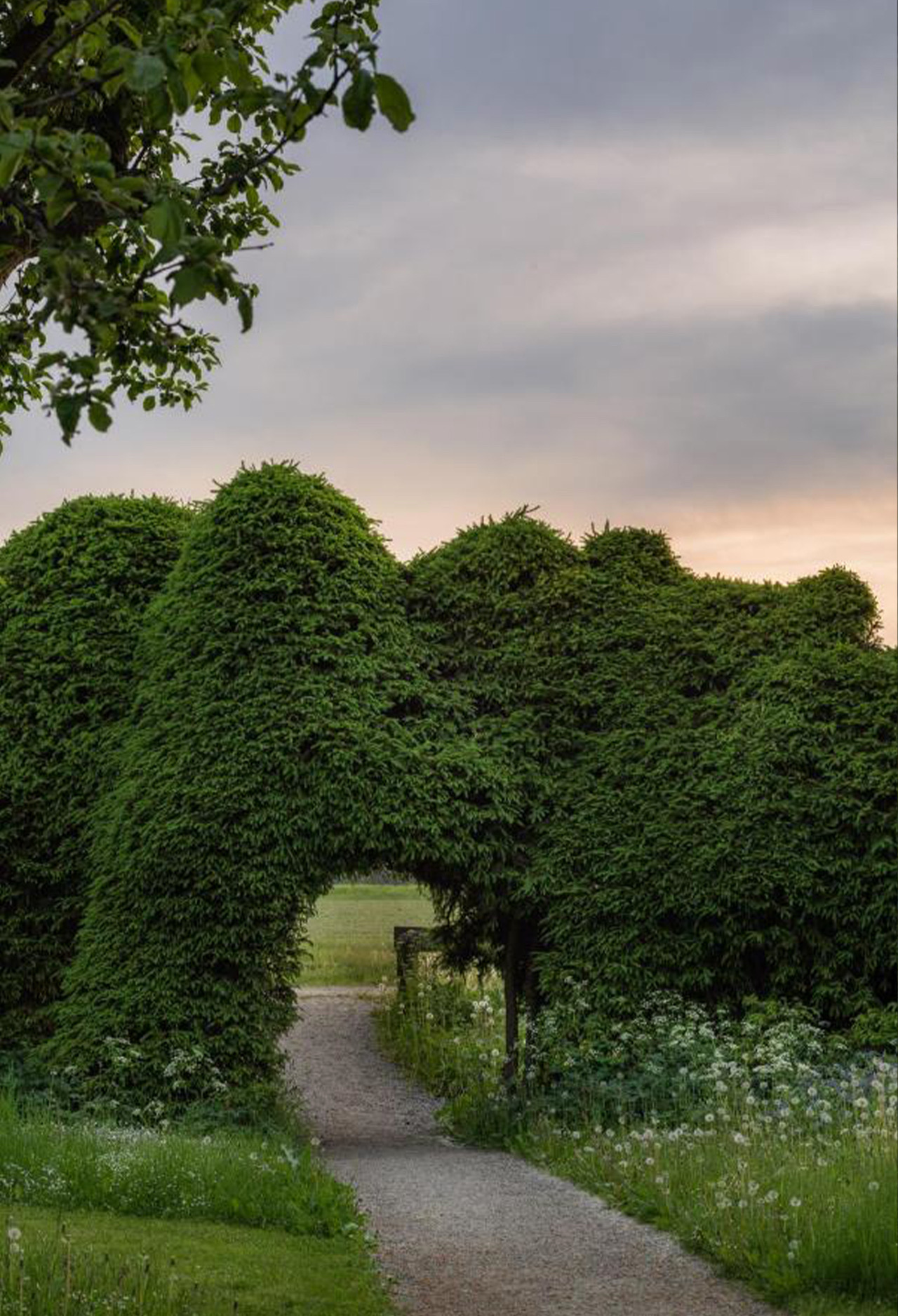
A hedge arch in the garden by Vita huset. 1960s–1992
The buildings and the park take shape
During the 1960s the park around Vita huset is reshaped under the direction of Arne Klingborg. From 1968 and for a quarter of a century, building after building goes up, designed by the architect Erik Asmussen: soft forms, natural materials and colours chosen with the same care as in a painting. Each building is shaped around what is to take place in it, such as the eurythmy building with its high ceiling and its octagonal floor.
The wastewater is cleansed biologically in ponds that are also part of the park, where the water is led through sculpted stone basins that set it moving in loops. In 1977 the buildings are awarded Sweden’s most respected architecture prize. The jury highlights the simplicity of the details, the few materials and the idiosyncratic colour scheme.
Asmussen works out the colours together with Arne Klingborg and the painter Fritz Fuchs, who takes on much of the painting itself. In 1992 Kulturhuset is inaugurated, built as a total work of art in which form, colour and light belong together.
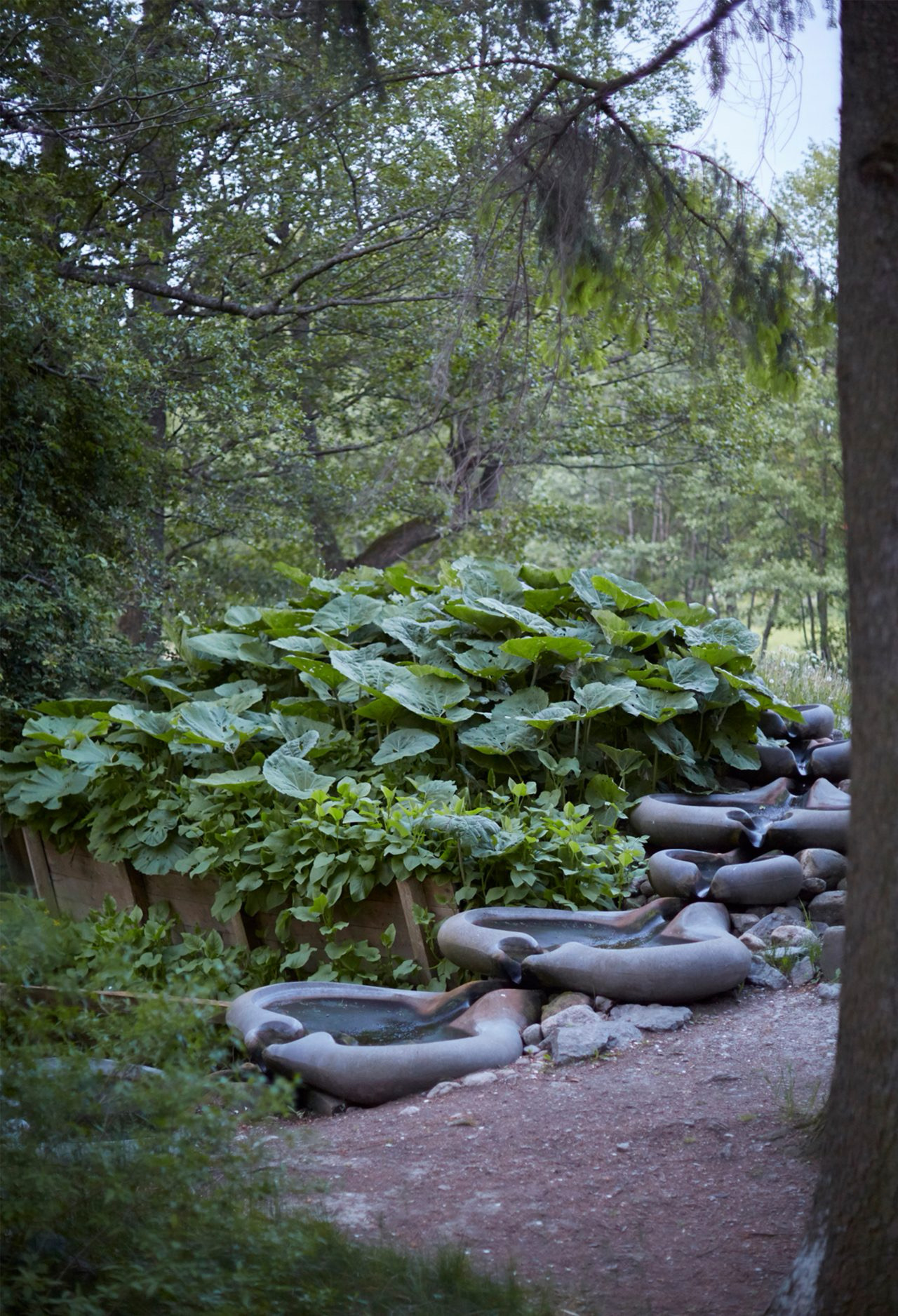
The water is cleansed in ponds and led in loops through stone basins. 1970s and 1980s
The training programmes
The seminary becomes the Nordic centre of anthroposophy. Waldorf teachers and Waldorf preschool teachers are trained here, as are curative educators and social therapists, art teachers, eurythmists, artists and biodynamic growers. Students come from all over the Nordic countries. Most of them live on site, and every corner is full. Afterwards they take what they have learned out into schools, preschools, farms and workplaces.
In the 1990s the training programmes are carried over into a university college of their own, which still holds part of its teaching in Ytterjärna today.
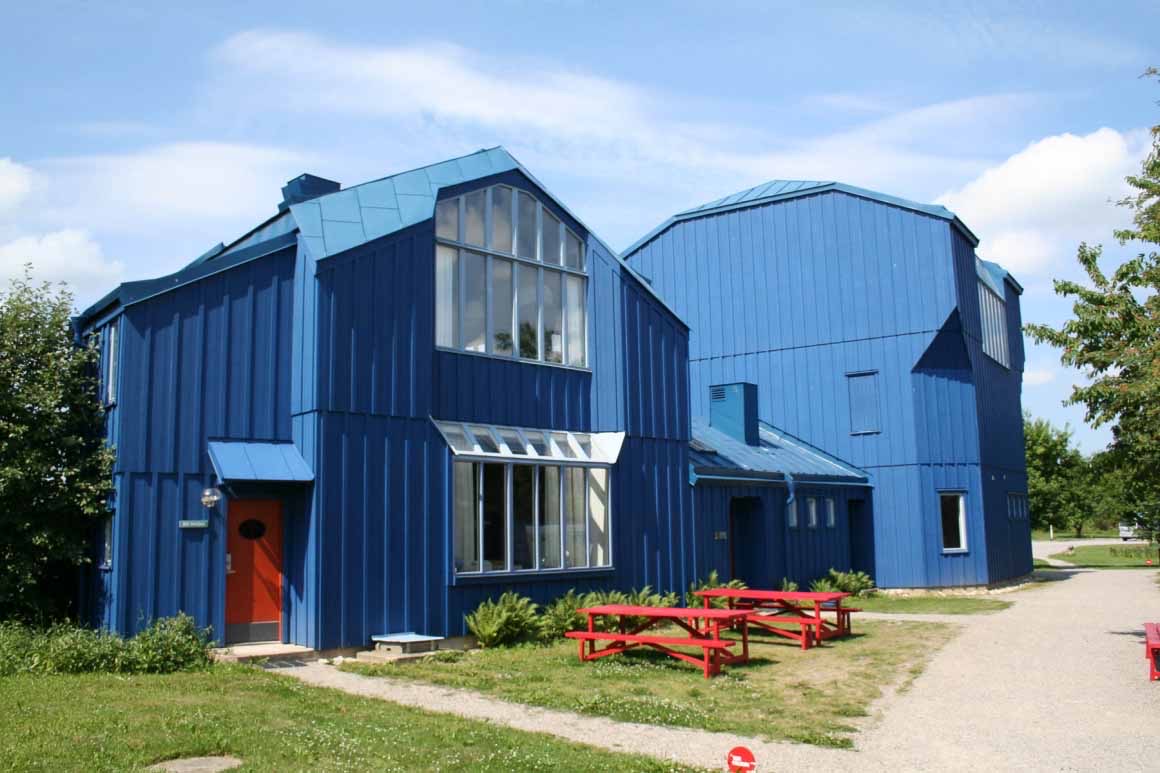
Blå ateljén, the blue studio, built in 1972. 2010
A new name, the same purpose
The foundation changes its name to Stiftelsen Kulturcentrum Järna. The founders wrote into the statutes that the purpose may never be changed, and it has not been. The same impulse carries it, but its expressions shift with time.
Today
With head, heart and hands
Education still belongs to the place. The Waldorf Early Childhood Training, which has been running since 2017, brings its participants together here four weeks a year, and more training programmes are in development.
What began as a seminary for young people lives on in what the foundation does today: in education, in cultural life and in the work with the park and the garden. In this way, what many people have built up here is carried forward.
The seeds in the foundation’s symbol carry the seminary forward. We sow for the future with seeds from our history.
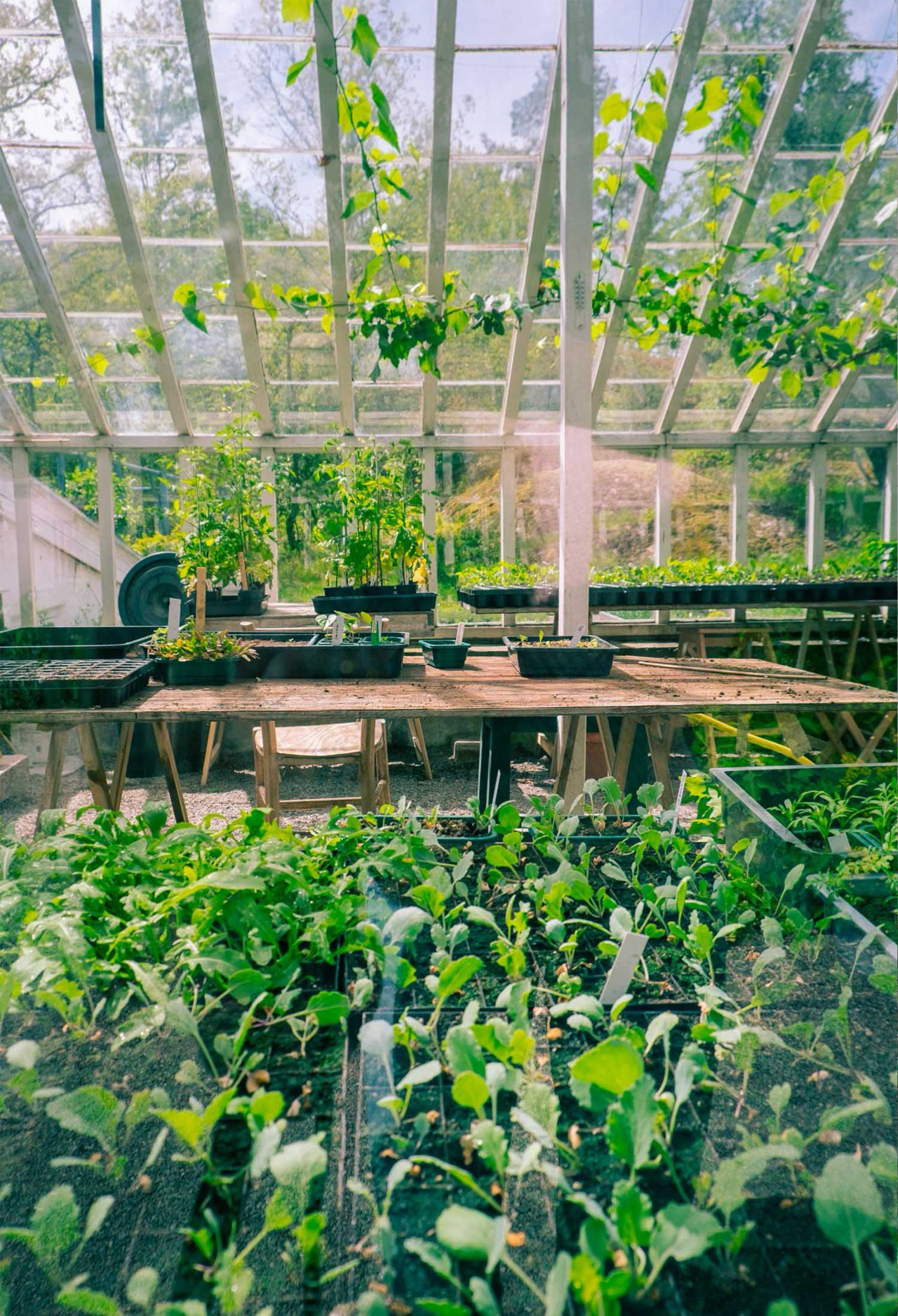
Young plants in the old greenhouse.
Freedom in learning, art as a path to knowledge, and a place built by many. That is the red thread running from 1965 to today.
Become part of what comes next
Would you like to study, collaborate or simply find out more about what is growing here now?