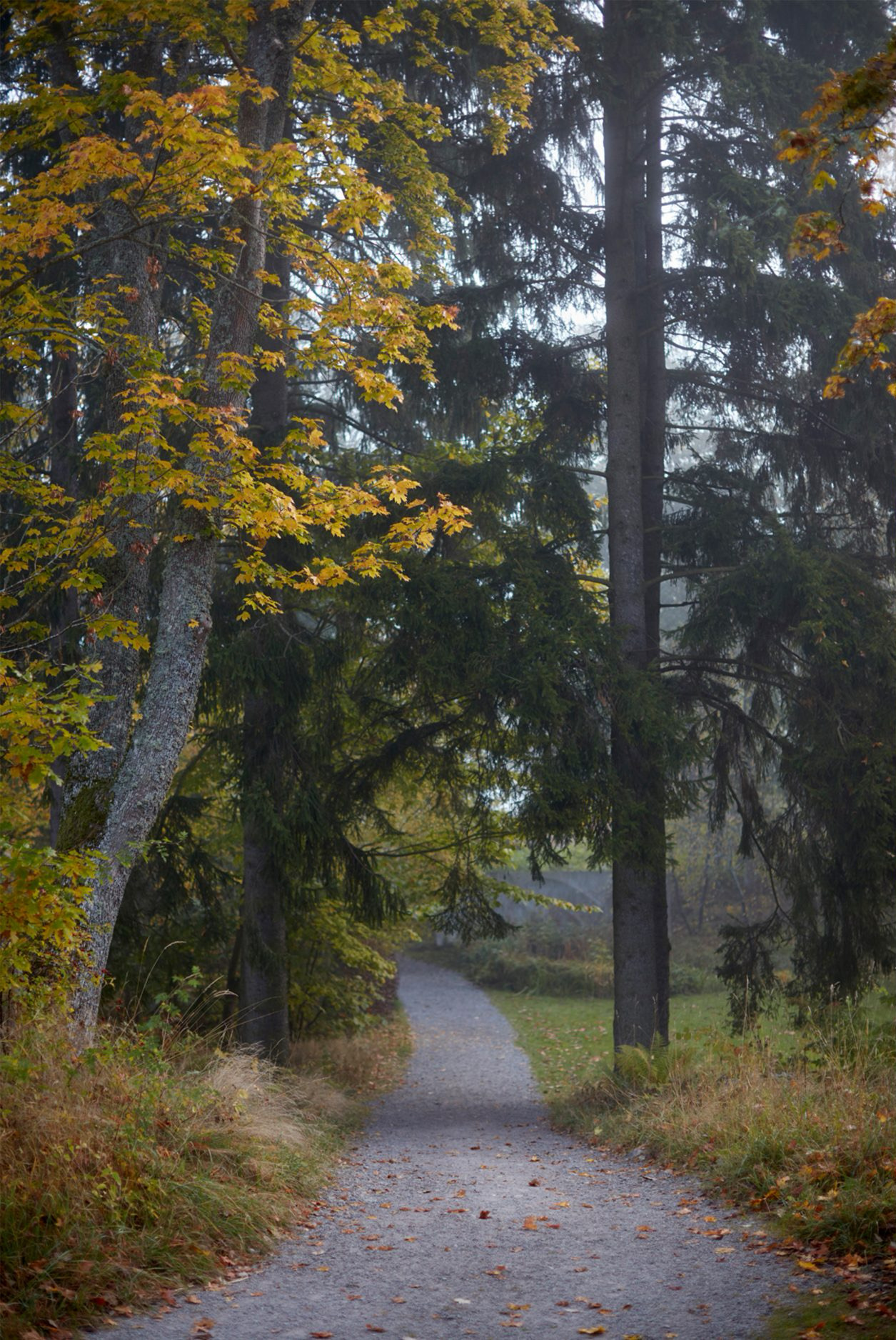
Architecture and art
Here the setting is not a backdrop to the work. It is part of it. The buildings, the colours, the water and the garden are shaped to awaken something in those who move among them.
Buildings that support what happens in them
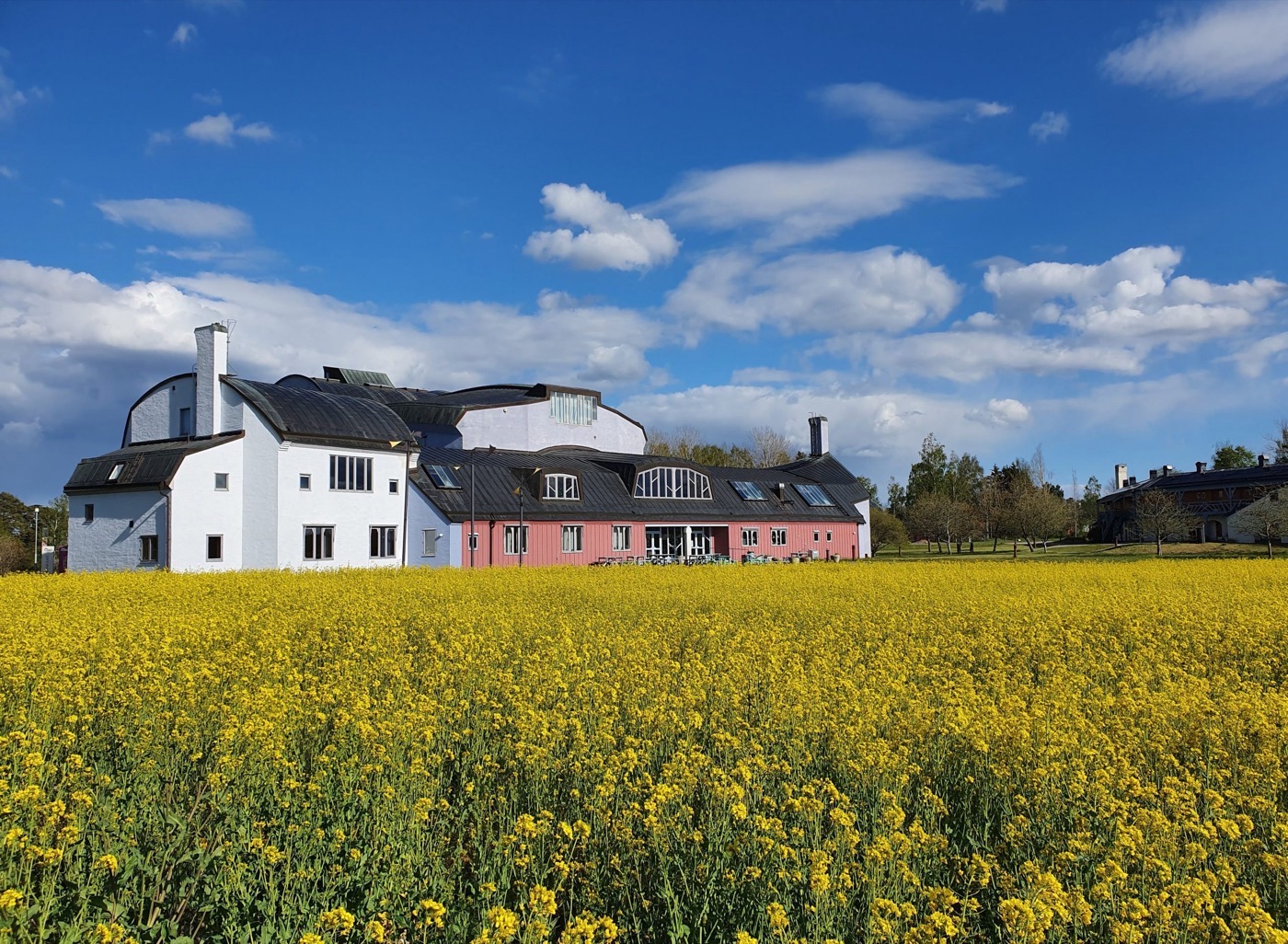
Between 1968 and 1992 the buildings took shape, one at a time, in the same spirit: soft forms, natural materials and light that is given room.
The buildings were designed by the architect Erik Asmussen. He came to Sweden from Copenhagen in 1939 and in the course of his life designed more than a hundred buildings in the Nordic countries and northern Europe. In 1976 he moved here himself, to Terrakotten, one of the buildings he had designed.
Each building was shaped by what was to happen in it. Eurytmihuset, the eurythmy building, was given its high ceiling and its octagonal floor to make room for the movement. Nothing is standard, but everything is thought through.
In 1977 the buildings were awarded Sweden’s most respected architecture prize. The jury highlighted the great simplicity of the details, the few materials and the idiosyncratic colour scheme, and how the form was connected with the pedagogy.
Colour
The colours were chosen with the same care as in a painting.
Asmussen developed them together with the artist Arne Klingborg and the painter Fritz Fuchs, who took on much of the actual painting. Many interior walls were glazed: the paint was applied in thin, translucent layers, so that it shifts with the light.
Blå ateljén, the blue studio, is bright blue. Other buildings are in lavender, pink and lime white, with details in terracotta. The colour is part of the form, not something added afterwards.
It is the same world of colour that this website is built on.
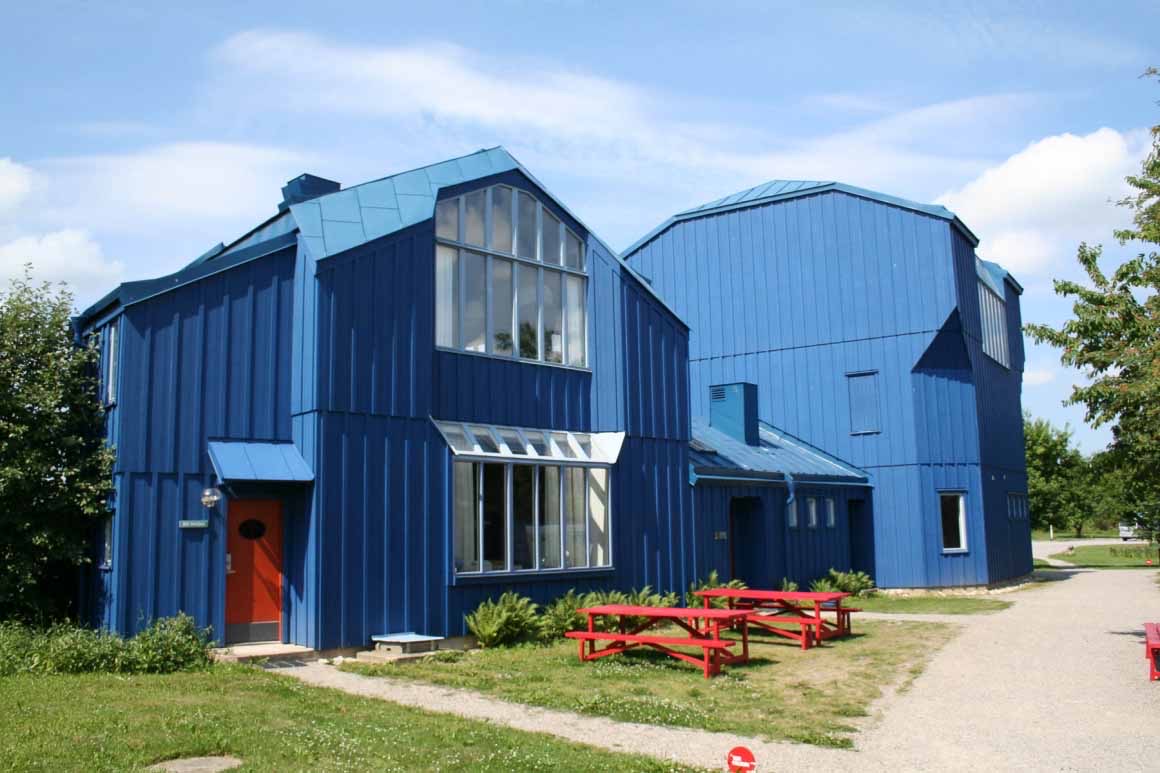
Here the beautiful and the useful are seldom two different things.
Water as sculpture
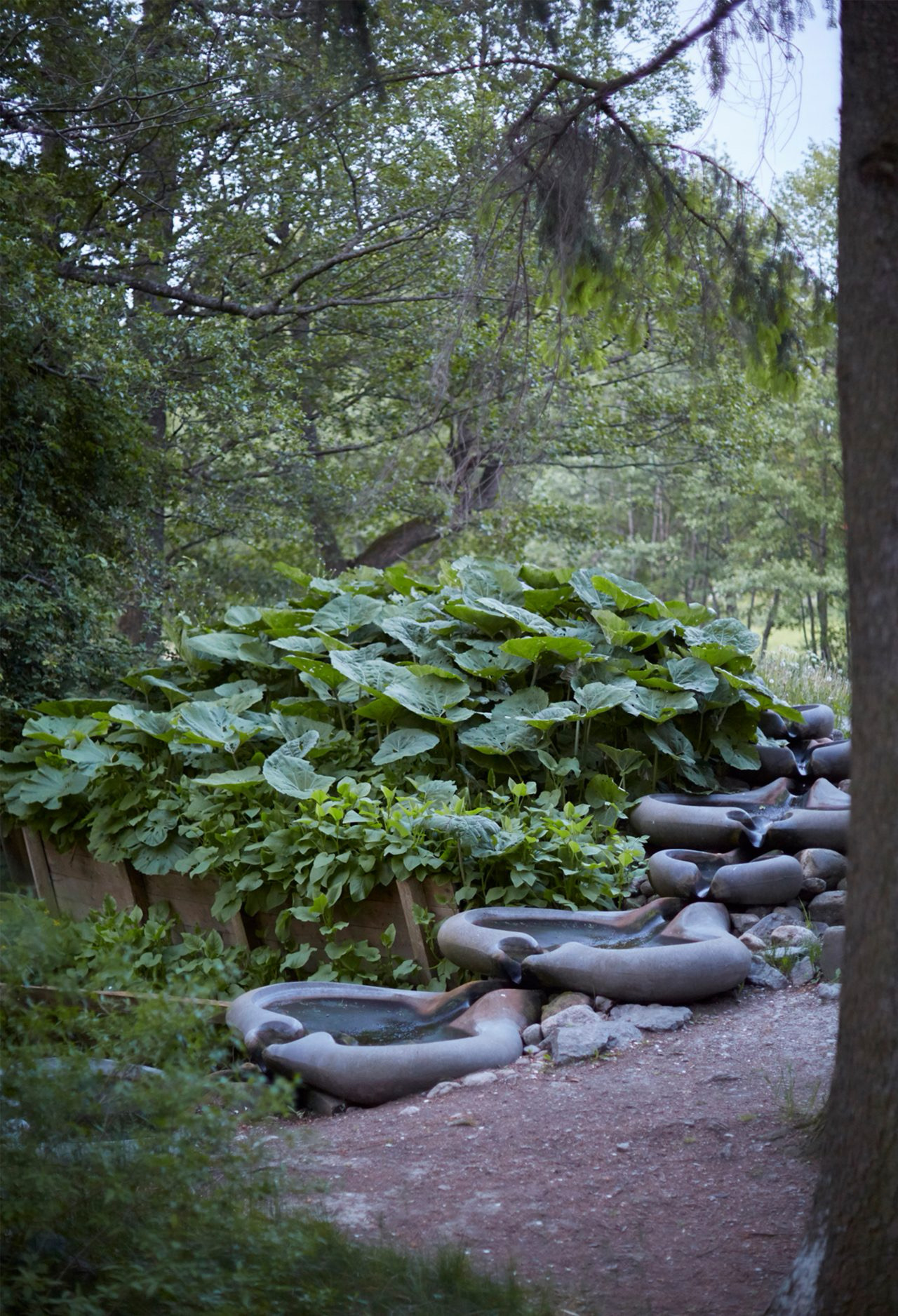
In the park the water is led through sculpted stone basins that make it move in loops, back and forth, as in a stream. It is beautiful to look at, and it has a purpose: the movement oxygenates the water as part of the biological purification.
Art and function, in the same form. It is a recurring theme here.
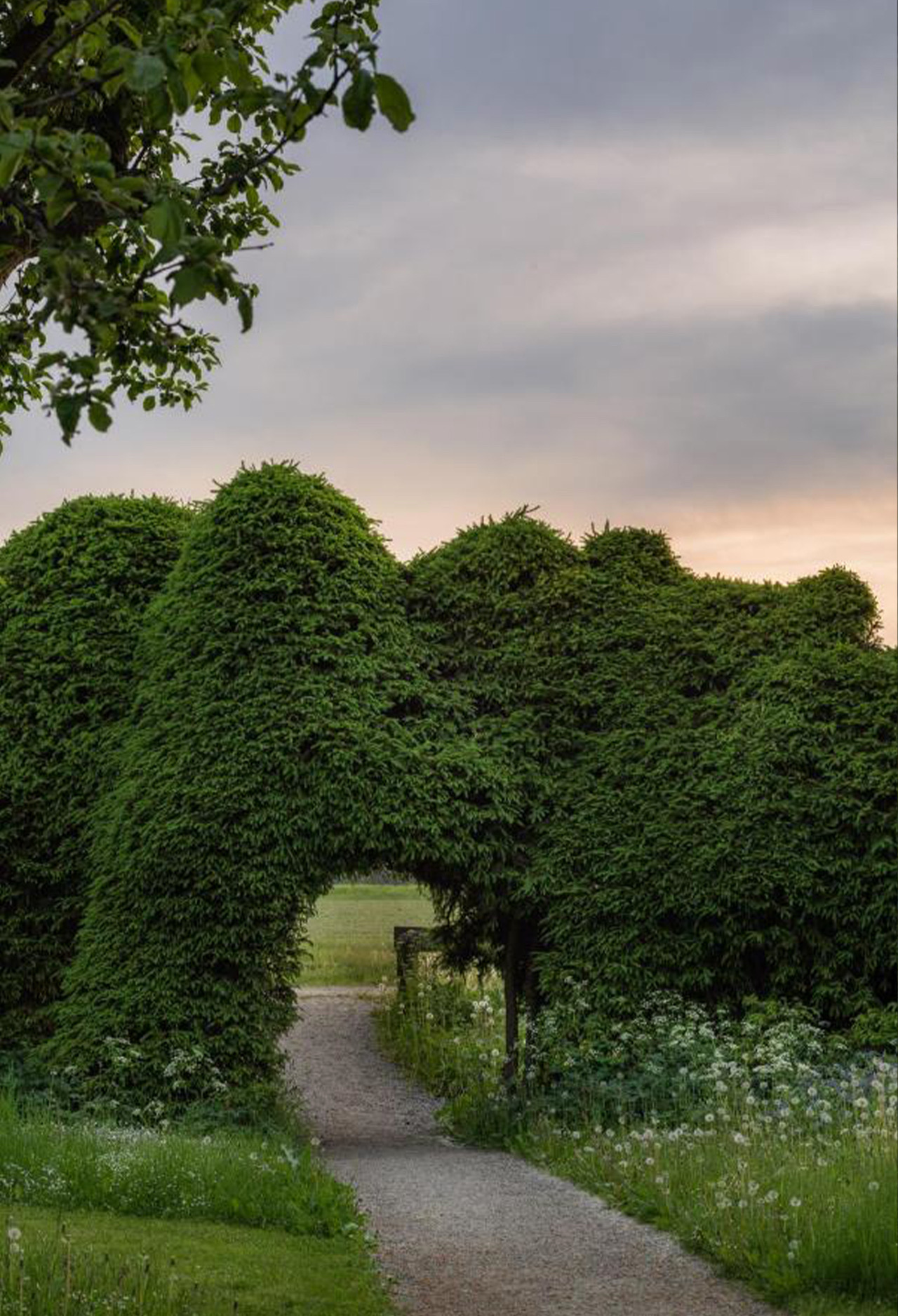

The park, too, is composed. The hedges, the arbours and the paths guide the eye and the feet, and every path leads somewhere.